

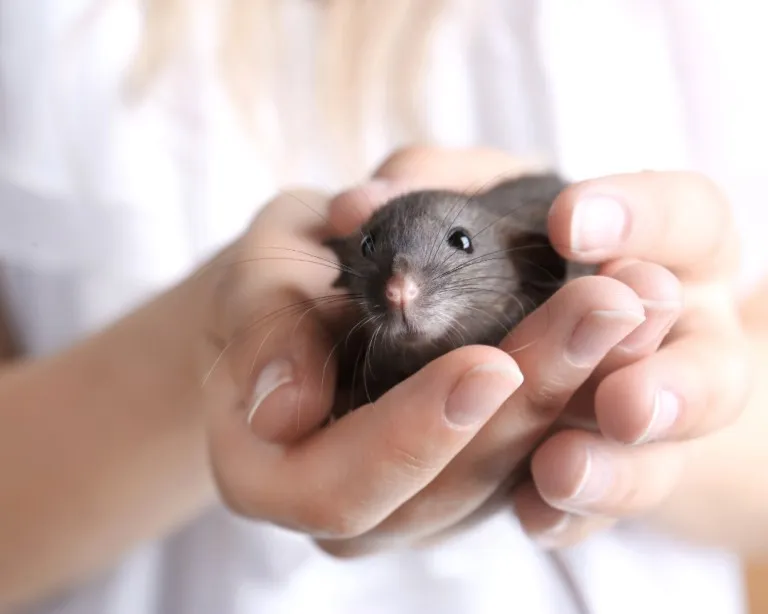
I was in my late twenties and at a pet store, holding a little white mouse. My hands were trembling, and I was crying.
I had been afraid of mice for as long as I could remember. As a child, I would check under the covers before bed each night, just in case a mouse decided to pay a visit to my toes. If someone even talked about mice or rats, it would set off a series of vivid nightmares for the next week. As an adult, I had periodically slept in a car instead of inside a family vacation home – missing out on the fun inside – in order to avoid a possible mouse encounter.
It was in the months leading up to my wedding when things came to a head. Mice had taken up residence in my grandmother’s home where I planned to be married, and I was terrified. At the time, I was training to be an exposure therapist, helping children and teens face the things they were most afraid of. I was working with patients who were afraid of all kinds of things like dogs, vomit, speaking in public, germs and illness, separating from their parents, and being in crowded places. My patients were learning that they could handle being in contact with these things every day through exposure practice. Meanwhile, I was plotting which car I could sleep in for the night before my wedding.
So I decided to try exposure therapy myself. Exposure is a key ingredient of Cognitive-Behavioral Therapy (CBT), which is the gold standard therapy for anxiety and OCD, and is what we practice at InStride. Exposure is about gradually facing the people, places, things, situations and activities that cause anxiety so that the brain can create new, more adaptive memories to compete with fear memories. In other words, exposure retrains our brains to no longer fear certain things.

Your Fullest Life Starts Here
Your Fullest Life Starts Here




I started by looking at pictures of mice. Next I watched videos of mice, and there are some gnarly ones out there! Gradually, I worked up the courage to do pet store exposures. At first, I would just watch the cage. Seeing mice running around and climbing all over one another initially made me feel nauseous. Once I started to feel more comfortable and confident, I got to the stage of holding a real mouse.
And then, as I was holding that mouse in my hand, it bit me. I’m not sure how much it actually hurt at the time, but I do remember screaming so loudly that it caused salespeople from all over the store to come running to the rodent section. It was a humbling experience. But it brought me to my worst-case scenario fear, and my brain learned that I could handle it.
At InStride Health, we’ve built a model to help kids make exposure part of their everyday lives. We teach them about the evidence-based exposure model, build a hierarchy or roadmap of exposures with them, and give them an exposure coach who coaches them through doing exposures in the community. Kids get out in the world and face their fears head on: they go into stores, libraries, restaurants, school, museums, and their neighborhood doing exposure with their coach who is with them virtually through their portable device and headphones. Our coaches also send text reminders to practice exposures so that kids can remember to keep practicing between sessions.
The exciting thing about exposure therapy is that it really works. I have dedicated my professional life to getting more children and teens access to exposure therapy because of the impact. Over the last two decades, I’ve seen kids and teens do things that they never thought they could do, and I’ve seen them get their lives back through this treatment. The virtual element makes exposure treatment that much more accessible. Research shows that virtual CBT, with exposure as a primary element, is just as effective as in-person for this population. In fact, virtual therapy opens up doors to real world exposures that children and teens can’t typically do in traditional in-office therapy.
Believe it or not, I now live out in the country with mice running wild in my basement. I don’t consider the little critters pets, but through exposure therapy, my brain has learned to tolerate and make peace with them.
What’s Next?
Practical guides, clinical insights, and stories about anxiety, OCD, and related disorders for families, providers, and anyone supporting a young person.
Expert-led sessions with InStride clinicians on the topics families and providers ask about most, available to watch on demand.
Press releases, media coverage, and the latest news on InStride's research, partnerships, and outcomes.


-optimized.webp)

Your Fullest Life Starts Here
Apply today to see if our evidence-based therapy program is the right fit. No cost, no obligation. Take the first step toward your fullest life.